
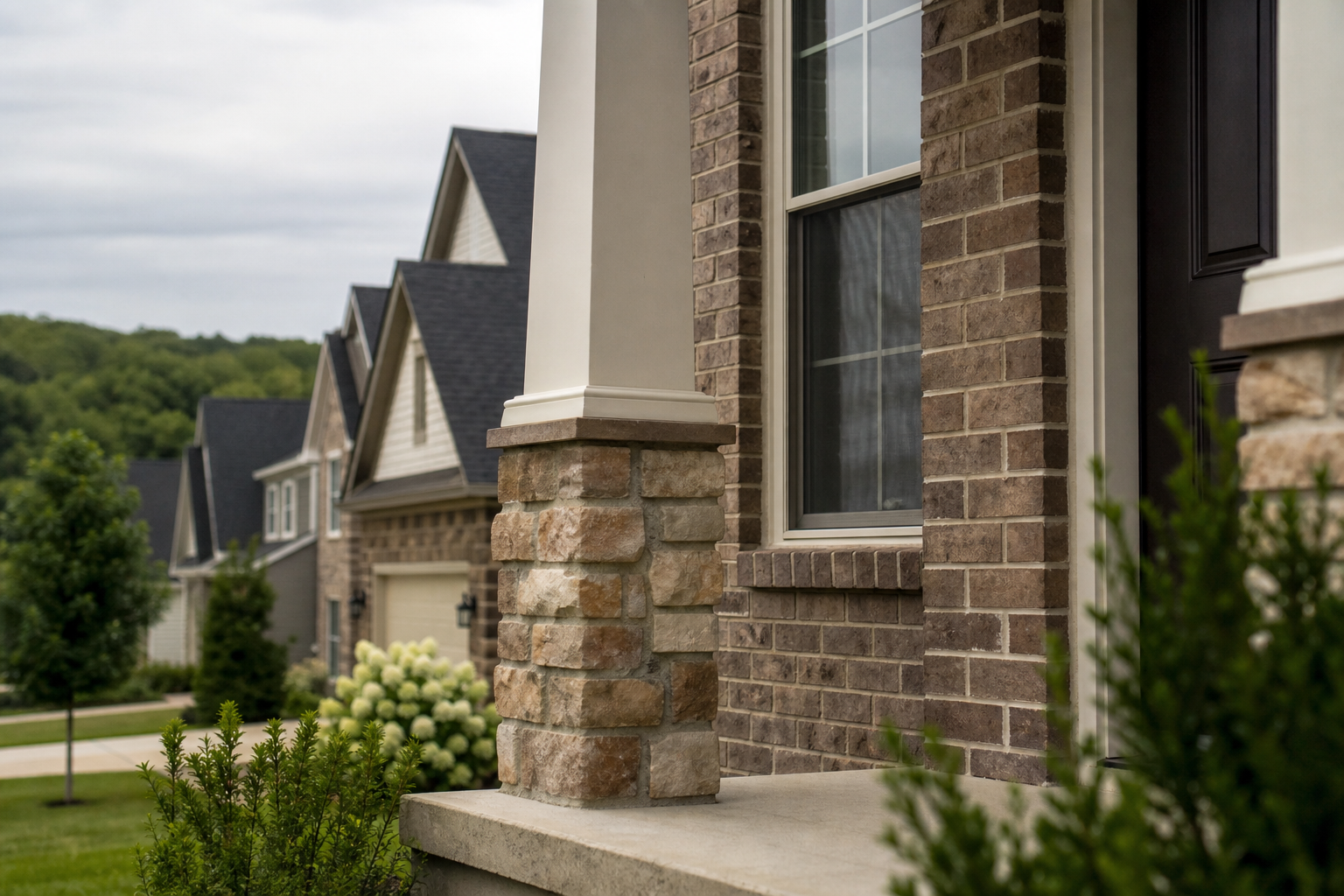
What makes the Route 228 corridor a smart place to buy a home in Pittsburgh's northern suburbs?
The Route 228 corridor in Butler County runs east–west through some of the Pittsburgh region's fastest-growing communities, including Cranberry Township, Adams Township, Seven Fields, and Middlesex Township. It connects directly to I-79 and the Pennsylvania Turnpike, giving residents quick highway access to Downtown Pittsburgh and major employment centers. For first-time buyers and those seeking a vibrant suburban community, this corridor offers newer construction, walkable mixed-use nodes, and a range of price points, all in a market that has consistently outpaced the broader Pittsburgh region for population growth.
Why the Route 228 Corridor Keeps Drawing New Residents
The numbers tell a clear story. According to U.S. Census Bureau data, Cranberry Township grew from 28,098 residents in 2010 to 33,087 in 2020, a 17.8% increase, making it one of the fastest-growing municipalities in the Pittsburgh region. Adams Township, just east along Route 228, grew even faster: from 11,652 to 14,481 residents over the same decade, a 24.3% jump. Meanwhile, the City of Pittsburgh's population edged down slightly from 305,704 to 302,971 in the same period, according to the same Census data. The growth story in this region is being written along Route 228, not in the urban core.
That growth isn't accidental. PennDOT and the Butler County Planning Commission both identify PA 228 as a major growth corridor, with ongoing improvement projects designed to handle the congestion and safety demands that come with rapid suburban build-out. The highway runs from PA 356 in Clinton Township through Sarver, Saxonburg, Buffalo Township, Middlesex Township, Adams Township, Seven Fields, and Cranberry Township before connecting to PA 8 and the I-79/US-19 interchange, a true spine for the northern suburbs.
What each community along the corridor offers
Cranberry Township sits at the I-79/Route 228 interchange and functions as the commercial and employment hub of the northern suburbs. Areas like Cranberry Springs and Cranberry Woods have added Class A office space, hotels, dining, and entertainment since the mid-2010s, and Cranberry Township planning documents show mixed-use residential and commercial proposals continuing through at least 2025. Housing here includes master-planned single-family subdivisions, townhome communities, and condos, much of it built post-2000.
Seven Fields Borough is largely built out but offers dense townhouse and condo communities that can provide relatively attainable entry points compared to larger single-family homes in neighboring townships. If you're a first-time buyer watching your budget carefully, Seven Fields is worth a close look.
Adams Township, east of Cranberry, is still in active build-out mode. Adams Township Planning Commission approvals show multiple residential subdivisions and townhome communities approved or under construction through the early-to-mid 2020s. The character here is transitional, part rural, part suburban, which appeals to buyers who want newer construction with a little more breathing room.
Middlesex Township, further east on Route 228, offers a mix of rural, exurban, and emerging suburban options. If you want more land while still staying connected to the corridor and Pittsburgh, this is where to look.
Commuting and community amenities
One of the corridor's biggest selling points is access. Direct connections to I-79 and the Pennsylvania Turnpike (I-76) mean residents can reach Downtown Pittsburgh and regional employment centers in Butler and Allegheny Counties without navigating city streets. Cranberry Township also promotes itself as a "live, work, play" community, with North Boundary Park, Graham Park, and an extensive multi-use trail network serving neighborhoods along and near Route 228. For those who prefer transit, Butler Transit Authority and Pittsburgh Regional Transit provide some service to the northern suburbs, though frequency and coverage are more limited than in the urban core.
What First-Time Buyers Need to Know Before Making an Offer
According to NAR's 2025 Home Buyers and Sellers Generational Trends Report, suburban locations remain the most common choice for recent buyers, with a significant share of first-time buyers choosing suburban or small-town settings over central cities. The Route 228 corridor fits that profile exactly. But buying here, especially in a competitive submarket, requires preparation.
We always walk buyers through each step before they make an offer so nothing ever feels overwhelming. Here's what matters most in this market.
Get fully pre-approved before you tour
This isn't just good advice, in a corridor where well-priced homes in Cranberry, Adams, and Seven Fields can receive multiple offers within days during peak listing periods, a full pre-approval (not just a pre-qualification) is often the difference between getting the home and watching it go to someone else. Verify your numbers directly with your lender before you fall in love with a listing.
Understand the Seller's Property Disclosure Statement
Pennsylvania law requires most sellers of 1-to-4-unit residential properties to provide a written Seller's Property Disclosure Statement before you're obligated under the agreement of sale, under 68 Pa.C.S. §7301 et seq. (Real Estate Seller's Disclosure Law). The Pennsylvania Association of REALTORS® publishes a standard Form SPD that covers roof, basement, structural components, water and sewage systems, heating and cooling, appliances, and environmental hazards like radon, lead-based paint, and mold.
For Route 228 corridor homes specifically, many of which are newer construction with HOAs, pay close attention to the sections covering HOA dues and special assessments, shared private roads within subdivisions, stormwater management facilities, and drainage easements. These details matter more in planned communities than in older, standalone homes.
Know what the title company does at closing
Pennsylvania is a title company state for most residential closings, according to the Pennsylvania Land Title Association. The title company conducts a title search in Butler County records to confirm ownership and identify liens, easements, HOA covenants, and other restrictions. It then issues a title commitment, coordinates with your lender, prepares the settlement statement, collects and disburses funds, and records the deed and mortgage with the Butler County Recorder of Deeds after closing. Think of the title company as the traffic controller of your closing, especially important in fast-moving, multi-offer situations. You have the right to choose your own title provider, subject to RESPA rules, as the Consumer Financial Protection Bureau outlines in its home loan toolkit.
Understand the real estate transfer tax in Butler County
Pennsylvania imposes a state realty transfer tax of 1% of the consideration under 72 P.S. §8101-C et seq., according to the Pennsylvania Department of Revenue. Butler County properties are also subject to local transfer taxes, from the county, the municipality, and the school district, so the total rate depends on the exact address. For a home in Cranberry Township, that means layering the state rate with Butler County, Cranberry Township, and Seneca Valley School District components; for Adams Township, the school district component reflects Mars Area or Seneca Valley boundaries depending on location. Verify the precise total for any property with the Butler County Recorder of Deeds.
By custom in the Pittsburgh region, the transfer tax is often split 50/50 between buyer and seller, but this is a matter of local practice and negotiation, not a legal requirement. The allocation is set in your agreement of sale, and either party can negotiate otherwise. Confirm how it's handled in your specific contract with your closing officer or attorney.
The title company collects the transfer tax from both parties at closing and remits it with the deed for recording, per standard Butler County closing procedure.
New construction vs. resale: the tradeoff
New construction along Route 228, single-family homes and townhomes, typically involves build timelines of several months, with buyers choosing lots and finishes in phases. Spec (inventory) homes may be available faster but they can be hard to find. Resale homes offer quicker move-in timelines but require careful review of the Seller's Property Disclosure and inspection results. In competitive markets, some buyers shorten inspection contingency windows to make their offers more attractive, something worth discussing with your agent before you're in a multiple-offer situation, not during it.
The biggest mistake we see is buyers rushing in without understanding the full process. Slowing down almost always leads to a better outcome.
A note on school districts:
Seneca Valley School District and Mars Area School District both document strong enrollment and capital investment plans reflecting the corridor's continued population growth. Both districts periodically adjust bus routes and attendance boundaries as new subdivisions are built. Verify the attendance area for any specific address directly with the district, don't assume based on proximity alone.
Your specific situation, budget, timeline, whether you want new construction or resale, HOA or no HOA, shapes which part of this corridor makes the most sense for you. That's exactly the kind of conversation we have with every buyer before we start touring homes.
Frequently Asked Questions
Is Route 228 a good area for first-time homebuyers near Pittsburgh?
Yes, the Route 228 corridor is one of the more active markets for first-time buyers in the Pittsburgh region. According to NAR's 2024 Profile of Home Buyers and Sellers, first-time buyers nationally made up about 32-34% of primary-residence purchases in 2024-2025, and suburban corridors like Route 228 are a primary draw. Cranberry Township and Adams Township median prices run above the overall Pittsburgh metro median, but the corridor still offers relative affordability compared to higher-cost metros, with townhomes and smaller single-family homes providing accessible entry points. Pre-approval before you tour is essential in this competitive submarket.
What communities are considered part of the Route 228 corridor, and how do they differ?
The corridor runs east–west through Cranberry Township, Seven Fields Borough, Adams Township, Middlesex Township, and communities further east including Saxonburg and Sarver, per PennDOT's PA 228 corridor planning materials. Cranberry Township is the commercial and employment hub with the strongest amenity base. Seven Fields offers denser, more attainable townhome and condo options. Adams Township is in active residential build-out with a transitional rural-to-suburban character. Middlesex Township provides more land and a quieter feel while still connected to the corridor.
How does traffic on Route 228 affect buying decisions, and are improvements planned?
Rush-hour congestion on Route 228, particularly near the I-79 interchange, is a real consideration for daily commuters. PennDOT District 10 and the Butler County Planning Commission have ongoing improvement projects along the corridor to address congestion and safety as suburban development has intensified. Before buying, drive your anticipated commute route at peak times and check current PennDOT project status for any work affecting your target neighborhood.
What should I know about the Pennsylvania Seller's Property Disclosure Statement when buying along Route 228?
Under Pennsylvania's Real Estate Seller's Disclosure Law (68 Pa.C.S. §7301 et seq.), sellers of most 1-to-4-unit residential properties must provide a written disclosure statement before you're bound by the agreement of sale. For Route 228 corridor homes, many of which are newer construction with HOAs, pay particular attention to sections covering HOA dues, special assessments, stormwater management, drainage easements, and shared private roads. If the seller discovers a new material defect before closing, they must update the disclosure. Read every section carefully and ask your agent to explain anything unclear.
How does the real estate transfer tax work in Butler County, and who pays it?
Pennsylvania's state realty transfer tax is fixed at 1% of the consideration under 72 P.S. §8101-C et seq., and Butler County properties also carry local transfer tax components from the county, municipality, and school district, so the total varies by exact address. Confirm the precise rate for any property with the Butler County Recorder of Deeds. By regional custom, the tax is often split 50/50 between buyer and seller, but this is negotiable and set in the agreement of sale, not mandated by law. Confirm the allocation in your specific contract with your closing officer.
Do I need a separate real estate attorney for a Pittsburgh-area home purchase?
Pennsylvania is a title company state for most residential closings, meaning a licensed title company can handle the title search, title insurance, settlement statement, fund disbursement, and deed recording without a separate attorney, according to the Pennsylvania Land Title Association. That said, you have the right to retain your own real estate attorney at any point, and for complex transactions, unusual title issues, estate sales, or contested terms, having one can be valuable. The CFPB's home loan toolkit outlines your rights in choosing a title provider.
The Bottom Line on Route 228
The Route 228 corridor isn't just growing, it's maturing into one of the Pittsburgh region's most complete suburban communities, with real infrastructure, employment centers, parks, and a range of housing options that work for first-time buyers, downsizers, and everyone in between. The process of buying here has its own local nuances: transfer tax structures that vary by municipality, HOA disclosures that matter more in planned communities, and a competitive market that rewards buyers who come prepared.
If you're ready to explore what's available along Route 228, or just want to understand what buying here would actually look like for your budget and timeline, reach out to schedule a conversation. We've helped buyers navigate this corridor for years, and we'd be glad to walk you through it.
Equal Housing Opportunity. Kim Van Horn is a licensed real estate professional regulated by the Pennsylvania Real Estate Commission. This article is provided for general informational purposes only and does not constitute legal, tax, or financial advice. Transfer tax rates, HOA obligations, disclosure requirements, and closing costs vary by transaction, confirm all figures and terms with your attorney, tax advisor, lender, or closing officer before proceeding.
Check out this article next