
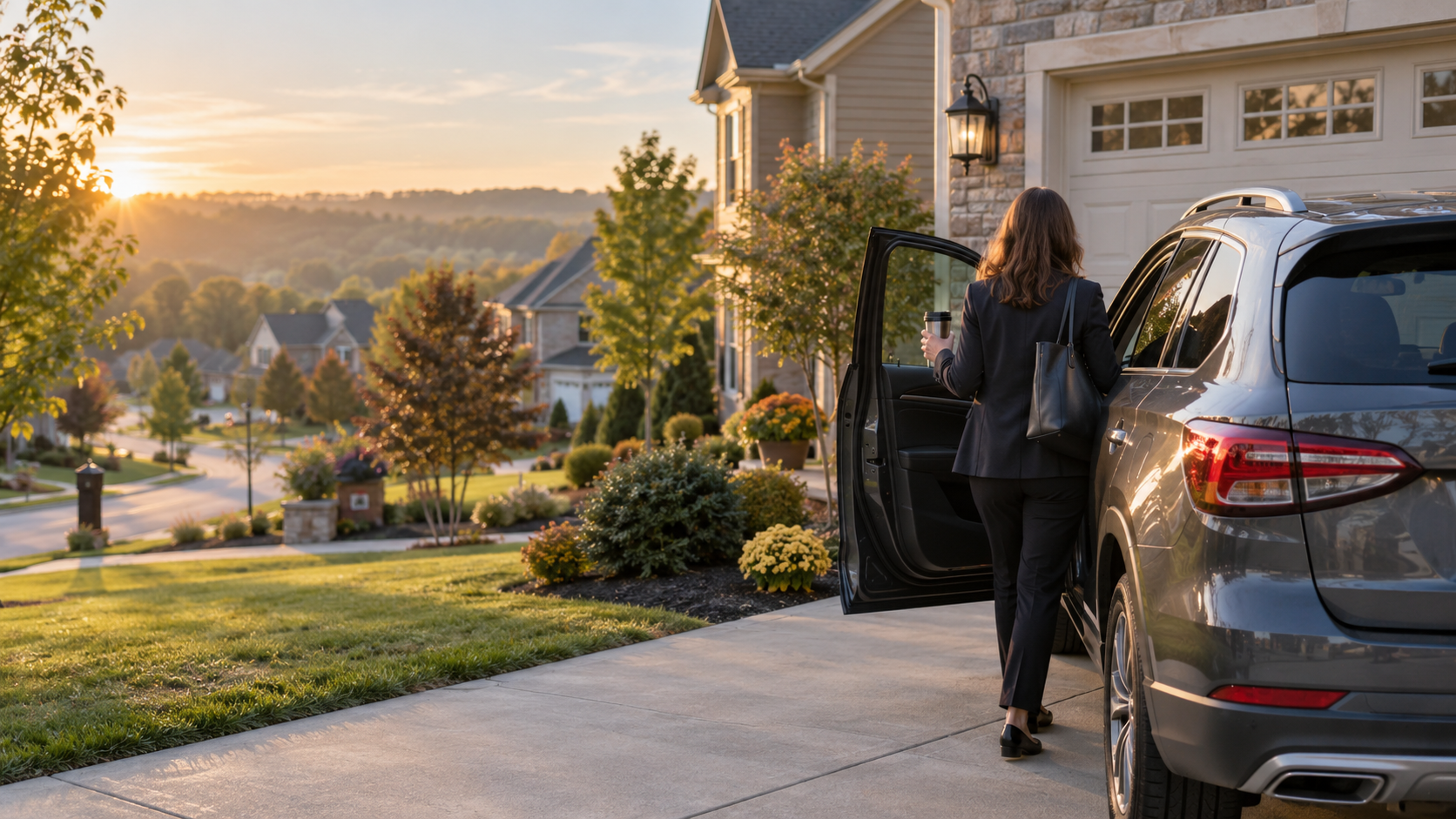
From Cranberry Township, expect 20–35 minutes to Downtown Pittsburgh in normal traffic and 40–55 minutes during peak rush hour via I-79 and I-279. Wexford runs slightly shorter. Both suburbs offer strong local amenities, making them realistic bases for hybrid and full-time commuters.
What should you realistically expect from a daily commute out of Pittsburgh's northern suburbs?
From Cranberry Township, the drive to Downtown Pittsburgh runs roughly 20–35 minutes in normal traffic and stretches to 40–55 minutes during the 7:00–8:30 AM and 4:30–6:30 PM rush windows via I-79 and I-279. Wexford, sitting closer in at about 15–20 miles from Downtown, typically shaves a few minutes off those ranges, though your exact address and chosen route matter just as much as the raw distance. Both suburbs offer enough local amenities that many residents go entire weekends without needing to cross the Fort Pitt Bridge at all.
Key Takeaways
- Cranberry Township to Downtown Pittsburgh runs 20–35 minutes off-peak and 40–55 minutes during the morning and evening rush on I-79 and I-279.
- Wexford's position roughly 15–20 miles from Downtown generally means slightly shorter, more flexible commute times than Cranberry, but route choice is a major variable.
- The northbound evening return (4:30–6:30 PM) consistently feels worse than the morning inbound, especially around the I-79/Route 228 interchange.
- Oakland destinations (Pitt, UPMC, CMU) add surface-street time and variability on top of the highway leg, treat them as longer and less predictable than a straight Downtown commute.
- Recent local market data shows a median sale price of $320,000 in Seven Fields, $315,250 in Pine Township, and $483,825 in Zelienople, reflecting the range of price points across the northern suburbs.
How do commute times from Cranberry and Wexford actually compare?
The honest answer is: it depends on when you leave, which route you take, and whether it's raining. That said, here's a realistic framework we walk every relocating buyer through.
Cranberry Township to Downtown Pittsburgh
Cranberry sits about 25 miles north of Downtown, making it one of the farther-out communities in our coverage area. The primary route, I-79 south to I-279 south, is fast and predictable when traffic cooperates. In off-peak hours, that trip can land in the 20–30 minute range. Leave between 7:00 and 8:30 AM, and you're looking at 40–55 minutes as the merge toward the Fort Pitt Bridge stacks up.
The evening return is where Cranberry commuters feel it most. The northbound push from Downtown (roughly 4:30–6:30 PM) tends to pile up around the I-79/Route 228 interchange, and locals consistently report that the drive home feels longer than the morning, even though the miles are identical. If you're planning weeknight kid activities or dinner reservations, build that buffer in.
One practical move we always suggest: drive your actual route during your actual departure window before you make an offer. A Tuesday morning at 7:45 AM tells you more than any map app estimate.
Wexford to Downtown Pittsburgh
Wexford's closer position, roughly 15–20 miles from Downtown, generally translates to a shorter baseline, but the North Hills road network introduces its own complexity. You have two real options: Route 19 south to I-279, or I-79 south to I-279. Which one wins on a given day depends on where exactly in Wexford you're starting and what the pinch points look like near 8:00 AM or 5:00 PM.
The upside of Wexford's position is flexibility. If your job splits time between Downtown and Oakland, or if you want to catch a show at the Cultural District on a Wednesday night without it feeling like a production, Wexford residents tend to find that barrier lower than Cranberry residents do. The perceived commitment of the drive shapes behavior more than most buyers expect before they move.
A note on Oakland commutes
Neither Cranberry nor Wexford offers a clean highway shot to Oakland (the Pitt/CMU/UPMC corridor). After the highway leg, you're navigating surface streets through the East End, and that last stretch is where variability lives. We tell buyers who work in Oakland to add meaningful time on top of whatever their Downtown estimate looks like, and to test that specific route, not just the Downtown one, before choosing a neighborhood.
For context on how commute patterns factor into home-buying decisions nationally, the NAR Profile of Home Buyers and Sellers consistently shows commute time as one of the top factors buyers weigh, and in our experience working with buyers across the northern suburbs, that tracks. The clients who test their actual route before deciding almost always feel better about their choice long-term.
What does weekend living actually look like from each suburb?
This is the question buyers don't always think to ask, and it ends up mattering enormously once you're settled. Here's the honest picture.
Weekend life in Cranberry Township
Cranberry has built enough of its own ecosystem that many residents genuinely spend entire weekends without leaving the township. The Route 228 corridor runs through a dense stretch of retail, restaurants, coffee shops, and fitness centers. Cranberry's parks and trail system, including North Boundary Park and community athletic fields, handles a lot of the recreational load for active families and adults.
Beyond the township itself, Cranberry's highway access makes regional day trips easy. Moraine State Park (Lake Arthur) is a straightforward drive for a weekend on the water. The Laurel Highlands, Pittsburgh International Airport, and the Pennsylvania Turnpike are all close enough that Cranberry works well for households that travel frequently or like to explore Western PA on weekends.
The tradeoff is that a spontaneous Tuesday-night dinner in the Strip District or a last-minute North Shore game feels like more of a commitment from Cranberry than it does from closer-in suburbs. Those trips happen, they just tend to get planned rather than improvised. For more on what Cranberry's growth means for buyers, including the expanding local employment base that shortens some commutes entirely, that's worth a read.
Weekend life in Wexford and the North Hills
Wexford's defining weekend amenity is North Park, the Allegheny County-run park with a lake, extensive trail network, golf, sports courts, and picnic areas. For many Wexford households, North Park is the default Saturday morning, no highway required. That kind of walk-or-short-drive access to a serious recreational anchor is something Cranberry doesn't have a direct equivalent to.
The Route 19 corridor south toward McKnight Road adds a dense retail and dining mix, so Wexford residents can stay local for most errands and casual meals. And because Downtown feels shorter from Wexford, more residents make spontaneous evening trips, a North Shore game, a Cultural District show, a late dinner in Lawrenceville, without it requiring the same level of mental planning.
At-a-glance market context for the northern suburbs
If you're weighing these communities from a price-and-market standpoint alongside the lifestyle factors, here's what recent local market data shows across three of the northern suburbs (trailing approximately 90 days, as of September 2026):
| Area | Median Sale Price | Median Days on Market |
|---|---|---|
| Seven Fields | $320,000 | 58 |
| Zelienople | $483,825 | 42 |
| Pine Township | $315,250 | 38 |
These are area-level medians, an individual home's value varies by condition, street, and build year. But they give you a useful orientation as you think through which part of the northern suburbs fits both your commute tolerance and your budget. The Late Summer 2026 Northern Pittsburgh Market update has broader context on where inventory and pricing stand across the region right now.
How does hybrid or remote work change the calculus?
A lot of buyers we're working with in 2026 are making this decision with a hybrid schedule in mind, two or three days in the office, the rest at home. That shift changes the math meaningfully.
For hybrid workers, Cranberry's longer commute becomes much more manageable when you're only making the drive two or three times a week. You absorb the I-79 rush hour less often, and on your remote days, Cranberry's local infrastructure, the parks, the Route 228 amenities, the regional highway access, pays off. The growth in Pittsburgh's employment base, including the Cranberry Woods office corridor, means some buyers in Cranberry are finding their actual commute is shorter than expected because their employer moved north too.
For professionals with frequent in-person obligations, court appearances, hospital rounds, lab work, campus meetings, Wexford's slightly shorter commute and more flexible routing toward Oakland tends to hold more value. The difference between a 25-minute and a 45-minute drive feels small when you're doing it twice a week; it feels significant when you're doing it five days a week.
The right answer depends entirely on your specific schedule, your household's daily rhythm, and which tradeoffs you're willing to make. That's not a question a blog can answer for you, it's the conversation we have with every buyer before we start touring homes.
Frequently Asked Questions
How long does it really take to commute from Cranberry to Downtown Pittsburgh during rush hour?
During the peak morning window (roughly 7:00–8:30 AM), the Cranberry to Downtown drive via I-79 and I-279 typically runs 40–55 minutes. Off-peak, the same trip can take 20–35 minutes. The evening return (4:30–6:30 PM northbound) often feels longer due to congestion stacking near the I-79/Route 228 interchange, plan for at least as much time as your morning commute, often more.
Is Wexford a realistic home base if I work in Oakland near Pitt or CMU?
It's workable, but Oakland adds a layer of variability that a straight Downtown commute doesn't have. After the highway leg, you're on surface streets through the East End, and that stretch is where timing gets unpredictable. Wexford residents who work in Oakland regularly tell us the key is building extra buffer into morning departure times and avoiding the 5:00 PM surface-street crunch. We'd strongly recommend driving that specific route, not just the Downtown route, during your actual work hours before committing to a neighborhood.
What's the difference in daily routine between Cranberry and Wexford for a Downtown commuter?
Wexford's closer position generally means a shorter, more flexible daily commute and a lower perceived barrier to spontaneous evenings in the city. Cranberry's commute is longer and benefits most from leaving before 7:00 AM or after 9:00 AM, which shapes when families schedule morning activities. On the weekend side, Cranberry's self-contained ecosystem means many residents rarely need to leave the township, while Wexford residents tend to use North Park and the North Hills corridor as their local anchor and make more frequent trips Downtown.
Can I realistically get to North Shore games or Cultural District events on weeknights from the northern suburbs?
Yes, both Cranberry and Wexford residents do it regularly. From Wexford, a weeknight trip Downtown feels relatively spontaneous for many households. From Cranberry, those outings tend to get planned rather than improvised, because the I-79/I-279 return after 10:00 PM (post-event) is actually smoother than the evening rush, it's the timing around the event itself that requires thought. Neither location makes city evenings impossible; they just shape how you plan them.
Are there good parks, trails, and sports options close to home in Cranberry and Wexford?
Both areas have strong local recreation without requiring a trip Downtown. Cranberry Township's parks and trail network handles a lot of the day-to-day outdoor activity for residents, and the Route 228 corridor covers most retail and fitness needs. Wexford's standout is North Park, the Allegheny County-run park with a lake, trails, golf, and sports facilities that many North Hills residents treat as their default weekend destination. For active households, either location supports a full recreational life close to home.
How bad is the evening traffic on I-79 and I-279 heading back to the North Hills?
The northbound evening return is consistently the harder direction. Congestion on I-279 and into the I-79 corridor tends to build from about 4:30 PM and stays heavy through 6:30 PM, with the merge near the Fort Pitt Bridge and the I-79/Route 228 interchange being the two main pinch points. Leaving Downtown before 4:15 PM or after 6:45 PM makes a meaningful difference. PennDOT's real-time traffic conditions are worth bookmarking as a daily reference.
Commute and lifestyle fit are two of the most personal variables in any home search, and the only way to know if a neighborhood works for your actual life is to test it during your actual schedule. We've walked hundreds of buyers through this exact analysis across Cranberry, Wexford, and the broader northern suburbs, and we're glad to map it out for your specific situation. Reach out to start the conversation.
Equal Housing Opportunity. Kim Van Horn is licensed through the Pennsylvania Real Estate Commission. This article is general information only and does not constitute legal, tax, or financial advice. Confirm your specific costs and transaction details with your title company, tax advisor, or lender.
Check out this article next